
I’m a little obsessed with culty things.
As a creator of brands and communications strategist for 15+ years, I’m fascinated by the psychology of what makes a brand gain cult-like status… and what convinces people to cling despite problems ranging from defective merchandise to murder.
Even armed with a comms degree, I’m not immune to influence. Apple, Lululemon, The Landmark Forum, SoulCycle, Bikram, Mary Kay, WeWork, CrossFit, NXIUM… these are all brands that have infiltrated my life and social circle despite problematic practices.
As Americans, we’re particularly subject to language around material success, personal responsibility, and rapid class mobility. We’re also operating from an unstable foundation of health care insecurity, lack of community, conflict avoidance, discouragement from/lack of education around critical thinking, and outdated structures around parenting and childcare. It’s the perfect soil in which to root an allegiance to a brand, magic pill solution, or unwise investment.
I get particularly enraged when this language is adopted by the coaching industry. It’s incredibly convenient that most business and life coaches have that job simply because they could afford to build a website (no actual qualifications needed), and that it’s your fault when their inexperience doesn’t meet your needs — it’s you that was “uncoachable” or didn’t believe hard enough.
In the words of Robert L. Fitzpatrick, author of Ponzinomics, researcher of MLMs*, and featured in the LuLaRich documentary:
“If everything is possible, then nothing is possible.”
Limits are reality and reality must be factored into business. Relentless positivity, past a certain point, becomes a business liability.
*ICYMI, it is nearly impossible to make money as part of an MLM if you get in past the first couple of levels. And it is impossible to make big money without persuading people to join at the levels below you because the structure is reliant on recruiting. So those you’ll be recruiting will be guaranteed to make less money. All of this has been shown repeatedly, but you’ll never see it in the recruitment pitch. I made the decision to uninvite MLM contractors from Pregame membership in our very first month because it was immediately clear that their priority was selling to other members, not professional growth and exploration in community.
For my fellow cult followers, here are my top picks for exploring the phenomenon of explosive organizations in America, how they grow, and why they thrive:
The Dream
This podcast has an excellent season on multi-level marketing companies, how they work, and why they’re legal. This was also the first place I finally heard a journalism outlet exploring the connection between Trump and the positive thinking movement originating with his membership at Norman Vincent Peale’s Marble Collegiate Church.
Cultish
I inhaled this brilliant new book by Amanda Montell in less than a day. The single most important concept was that of the “thought-terminating cliché,” which affirms positivity while shutting down debate. Finding a term for this type of gaslighting that occurs everywhere from church to the office was gratifying and empowering.
LuLaRich
Another bingeworthy new entry to the genre, this four-part docuseries explains why LuLaRoe grew so fast before imploding. As someone decidedly not in their target demo, it was helpful to understand what drew my suburban sisters to the brand, as well as what to do and what not to do when scaling a business.
WeWork
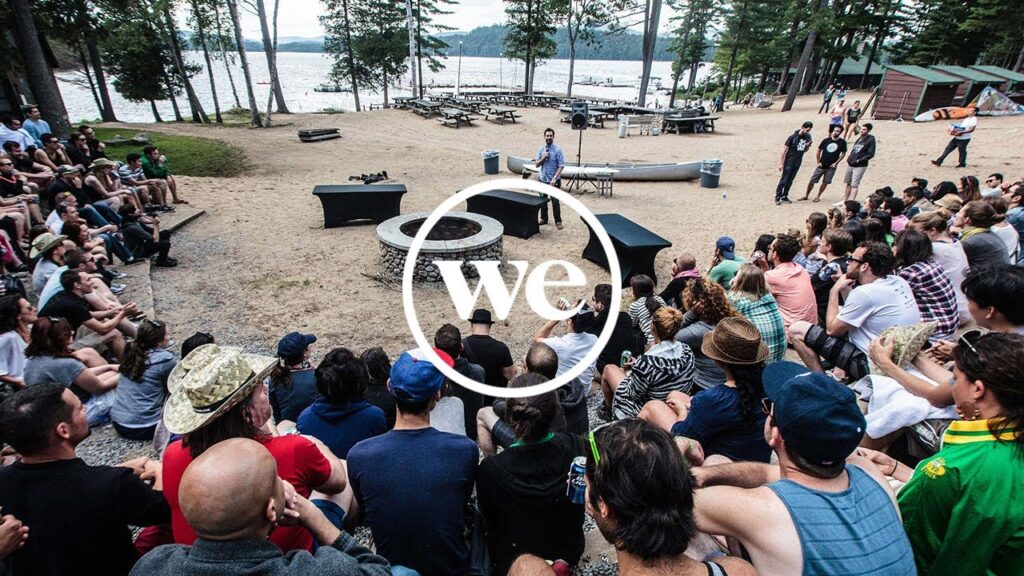
One of my entrepreneurial-millennial badges is that I was the first member to move into the very first WeWork the day they opened. So it was with great interest that I watched Hulu’s documentary, which provides a glimpse that barely touches the experience we had in that first year. (That’s me in the green track jacket, pictured above at WeWork Summer Camp 2013.)
So how do we dodge the more nefarious editions of culty brands?
Shop smarter. Before you invest in any solution, ask about results and expect direct, non-salesy answers. Speak out against shoddy business models, questionable pricing, and business gaslighting. Surround yourself with people who tell it to you straight so that you have access to outside reality checks while part of any community.